
I miss my friends. I really do. Though overall, I have to admit I have enjoyed what quarantine has done for my relationship with my husband. (Check out my blog here.) I don’t like that keeping up with my friends on social media looks like scrolling through Instagram rather than making plans to hang out in person. 
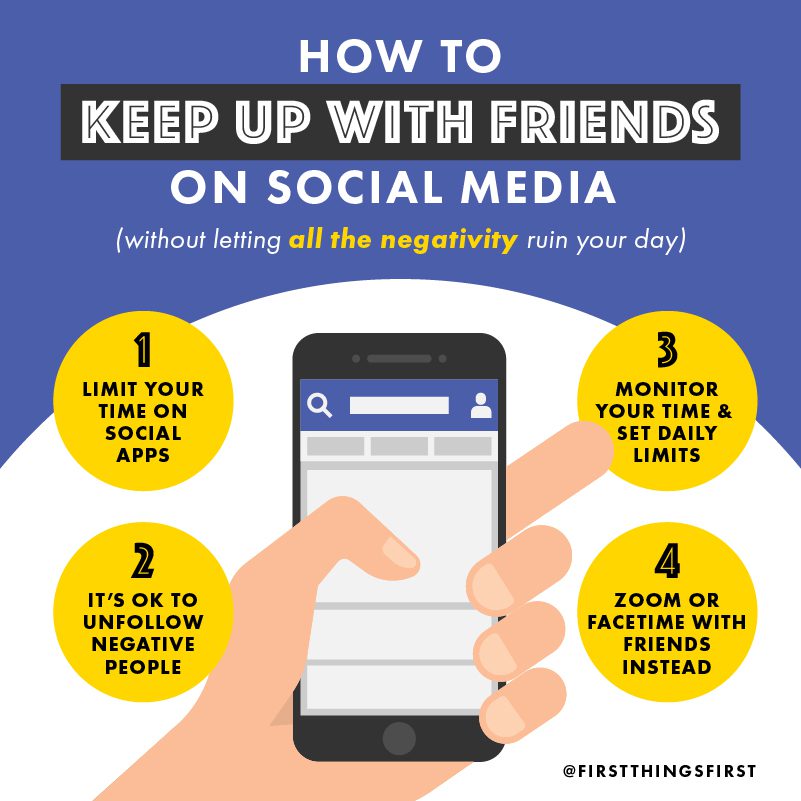
As much as you love seeing what’s going on in your friends’ lives, it can become a little overwhelming. When someone is on social media, they aren’t just seeing friends’ posts. They are also exposing themselves to the negativity filling the spaces amidst the photos and posts from friends. Time spent on social media has increased by 20% during COVID-19 lockdowns, according to SocialMediaToday. Forbes also confirms that social media is full of misinformation.

It’s been rock bottom for a lot of people and an uphill battle for the world. Thousands of people are heartbroken over the deaths from COVID-19, hardships, job losses, divorces, families separated from loved ones in the hospitals, and the list goes on.

However, I really do believe there are silver linings for every dark cloud. We have seen the world set aside its differences and make trade agreements. People are sharing intellectual property for the good of humanity, not just the people in their country. We’ve seen volunteers come out of the woodwork to help deliver food to students and families who needed it. Artists share their skill and their specialty and teach people online. Musicians do in-home concerts and athletes provide free at-home training. 

I think we want to see the good—to keep up with what’s happening in our friends’ lives nearby and around the world. We also want to filter out the negative.

Here are some ways to help you keep up and stay positive:

  1. Limit your time on social media. As soon as you feel yourself start to scroll for the habit of it or because you’re bored, find something else to do. Once you’ve seen your friends’ posts and gone through their stories, shut the app. It’s when we get through the relevant posts that we start seeing the suggested videos, photos, or news.
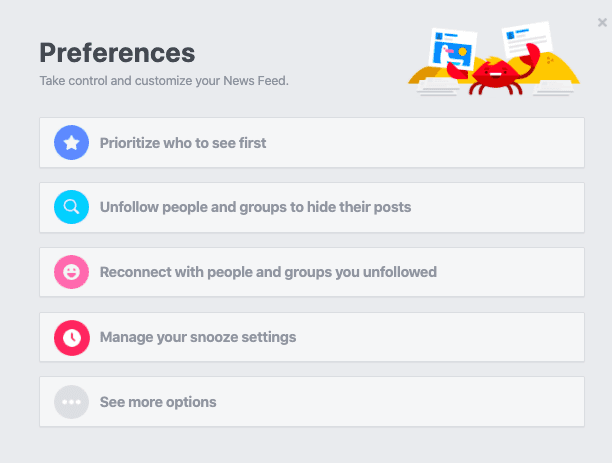
  1. If you know someone or an entity you follow is negative each time you come across them, unfollow or block them for a bit. On Facebook, you can prioritize who you see when you click News Feed Preferences. Put your close friends and family as a priority. Help yourself keep tabs only on who you want to keep up with right now.
  1. If you have an iPhone, you can set daily limits on social networking in your settings or download an app to help you monitor your time. Android phones have apps that do this as well. Not only does putting a cap on your time help you create boundaries, but you are taking a step to protect your mental health. Substantial amounts of research from The US National Library of Medicine—National Institutes of Health have found associations between heavy technology use and poor mental health outcomes among adolescents and young adults.  
  1. If keeping up with your friends is your main concern, try setting aside time to FaceTime or have a Zoom call with them instead.

This will take keeping up with each other up to a more personal level. It’s way more personal than a text or even a phone call.

It’s been a time of transition for everyone. Be patient with yourself as you adjust and be patient with your friends as they navigate their new normal. Some people use the comment section on social media to vent, but that doesn’t mean you have to engage with it. Hopefully, this helps you to keep up with your friends more and negativity less!

Image from Unsplash.com

Perhaps you’ve seen the pictures on social media. Brother and sister have been fighting all day. Mom has had enough. Mom gets one of dad’s t-shirts and makes brother and sister wear it—at the same time. 

Brother and sister look thrilled.

Some have called this a “Get-Along Shirt.” The funny thing is, while this may be a great deterrent for kids to stop fighting (“If you two don’t stop it, I’m getting out THE SHIRT!”), I’m not sure it does much to help brother and sister get along while they’re in the shirt. In my opinion, quite the reverse: It just makes them want to fight more. 

This is how I picture being in quarantine with a spouse that you don’t particularly like. You feel glued at the hip, but you can’t get away. 

THE SITUATION

The COVID-19 pandemic has caused us all to change our way of life. And if there has already been tension in your marriage before this whole mess began, then right now you might be wondering, how the heck do I get out of this giant shirt? 

Let’s think about this situation. Chances are, back in the “old days” (pre-pandemic) one or both of you spent at least some of your day apart, possibly at work. Point is, your regular routine gave you time apart so that when you came back together, your relationship was more manageable. Life provided some ways to cope with the tension.

Not so at the moment in quarantine. There is no coming back together because there’s no time apart. Together is your reality right now. If there was tension in the marriage before, the coping mechanisms you used back then aren’t there anymore. 

And whatever differences were coming between you back then, now they are magnified. You see the differences more. You are in difference-overload. And so the tension builds.

THE CHOICE

Your situation gives you a couple of choices: 

  • You can choose to avoid the issue, be miserable in your Get-Along shirt, and live in increasing conflict, tension, stress, and anxiety. Sounds fun. (See picture above.)
  • Or, you can dig in your heels, be intentional, and decide to do what you can to lessen the tension and improve the situation with your spouse 

★Disclaimer★ What I’m about to share with you is helpful, but it’s going to take intentionality and humility. When two people don’t get along, things only get better when pride is put aside. And yes, both people in the marriage need to make the effort, but it takes one person to begin to lead the dance. In other words, choose to be the first person to take up the mantle of humility; more often than not, the other will follow. 

So you first have to ask some questions: 

  • What is it specifically you don’t like about the person you’re in quarantine with? 
  • Do you not like your spouse, or do you not like the situation you’re in? 
  • Does everything about your spouse get on your nerves? Or are there one or two qualities that are magnified by the circumstances of the quarantine? 
  • Could… this… possibly… be…you? Are you stressed, and that affects how you see your spouse? What are you dealing with inside of you that makes you see your spouse in certain ways?

These questions are humbling—they can bring you down a notch or two. But considering sincere answers help you to stop and put the right perspective on the situation. Then you are freed up to make a healthy response rather than a knee-jerk reaction. 

PRO-TIPS

Having said that, let’s consider some pro-tips: 

  • Choose to see your spouse as a whole rather than one or two negative qualities. When there is something bugging me about my spouse, I have to stop and consider all the things that make up who she is, and I find the positives far outweigh the negatives. I consider all the ways she contributes to the family, what she’s done for me in the past, her background and history, how good of a mother she is. And it minimizes in my mind whatever it was that was getting on my nerves. 
  • Think of five things you’re thankful for your spouse. The next time you find yourself frustrated at your spouse, try this. It’s a way to train your brain—to condition yourself —to see your spouse as a whole. When I’ve done this, I’ve found more often than not that I was frustrated at a molehill rather than a mountain. And even if you are facing a mountain, thinking of why you are thankful for your spouse clears your headspace to approach the issues in calm, effective ways rather than being reactive. Take a few minutes, write down five reasons you’re thankful for your spouse, and read them over. 
  • Take time to decompress and do things to lower the tension. Lots of times conflict with your spouse is exacerbated by the stress of everything else going on around you. Take the opportunity to detach from life for a little while and do some self-care—both as a family and on your own. Go on a walk, meditate, read something inspirational, do some push-ups, cuddle with your cat or dog. Your self-care should be productive and healthy rather than merely an escape. This helps ease the tension and set a healthier atmosphere for communication. (Here and here are some great ideas on self-care.) 
  • Try not to make big decisions during this time. The idea is to lower the potential for stress, not the reverse. If you can help it, avoid making big, life-altering decisions like major purchases or having children (although you need to keep the ones you already have). 
  • Adopt an attitude of gratitude. Prolonged traumatic situations like the pandemic can cause a person to focus all their attention on the negative. This is extremely stressful and adds to the tension in your marriage. Reverse this pattern by thinking of the things you are thankful for at this time. And no matter the situation, there are always things to be thankful for. Make a list. Add to it daily. Gratitude helps lower the tension in the atmosphere and put the issue at hand in a proper perspective. 
  • Put grace into place. Consider that our circumstances are affecting not only your emotional health but also that of your spouse. Put yourself in their shoes and try to understand what they may be feeling. Keep in mind that you probably have magnified qualities that get on their nerves right now as well. 

Quarantine has put a strain on all kinds of relationships, especially marriages already under strain. But by being intentional and putting pride aside, the tension can lessen. Putting these practices into place will help you and your spouse get along during this time of quarantine. 

(Get-Along Shirt not required.)

Image from Unsplash.com

By nature, I believe we as humans are caring and kind. We like to help and be there for others when they celebrate and when they go through tragedy. For example, we buy gifts when people have babies, get married, retire and reach other various milestones. And we bring food when others suffer the loss of a loved one or lose everything in a natural disaster. We sit close to those who are suffering from a terrible disease like cancer, in the midst of grief or going through a divorce. That’s how we love, comfort, support, and uplift. 

Loving and caring for others who continue to face many of life’s celebrations and trials has become difficult since the pandemic. Our hearts begin to hurt because of the weddings we miss and the families we can’t mourn alongside. We grieve over the showers we can’t attend and the relief efforts we are limited in assisting after natural disasters. 

The core of our humanity seems to be stripped away from us because of the need to quarantine and stay safe and healthy. Sometimes, if you’re like me, you begin to wonder, is it worth it? Is what I’m giving up to “stay healthy” worth it? What’s the point of being a friend when you can’t do all those things that friends do? I don’t want to miss the birth of my cousin’s baby or the funeral of my neighbor’s son. What do I do?

How to Check In

That’s where we have to be creative. Here are some ideas to support, encourage and love those that are facing life-altering events during this time of quarantine.

  • Arrange for meal delivery and share virtual meals—We love to take food to those who are experiencing life-changing events. Instead, have the food delivered to them. Then, use a video app to eat together while you share in their grief or their excitement.
  • Virtual Photo Albums—Simply going through digital photos to walk down memory lane and using the “share screen” function that many video apps have promotes the bonding and connectedness we desire.
  • Drive-By Parade—Gather some of your friends safely. In your own cars, parade in front of their home with signs of celebration. 
  • Gift-Giving Through Online Registry—Help loved ones set up online gift registries and purchase the gifts electronically. (Don’t assume everyone, such as your soon to be 70-year-old grandmother, knows how to set up an online registry.)
  • Electronic Greeting Cards—Find a ready-made one or design your own. You can send these directly to their smartphone. A sympathy card or one of celebration can offer timely words of encouragement. 
  • Prepare A Virtual Trivia Game Night—Create trivia facts centered around the person being celebrated (TriviaMaker is a good app).
  • Mail a Handwritten Letter or Card—There’s still something that makes me feel special when I receive a letter. Knowing that someone took the time to handwrite something themselves—everything about that says that I am important. Emails or texts can’t match the feeling of a handwritten letter.
  • Attend Events Virtually—Knowing that you took the time to attend an event, whether it’s a wedding, funeral, or party, tells your loved one that you won’t let social distancing stop you from sharing in their moment. 
    • Leave comments on their social media feed when appropriate. We know what it feels like to read our social media comments and feel the love and support of those who couldn’t be with us physically. It uplifts the spirit.
  • Call. But Use Video Calls As Often As Possible—Be available to listen. Allow those you love to vent, blow off steam and complain. You may not be needed to fix anything. Just being a listening ear goes a long way.
    • Note: When someone crosses your mind, call them then. Don’t wait—I can’t tell you how many times someone has called me at the perfect time when I was dealing with something. And they often started with, “I was just thinking about you and thought I’d call to see how you were.”
  • Record And Electronically Deliver A Special Video Message—You may be providing a keepsake that your loved ones will treasure forever.

Encouraging, loving and supporting others does make us feel good. It uplifts us and helps us feel meaningful and full of purpose. Ultimately, we have to remember that it’s not about you—it’s about the person on the receiving end. 

A virtual meal or handwritten letter may not feel as satisfying to give right now. However, it can still help your loved one’s big life moments bring them the joy and peace they may need. That’s one of the special perks of having you in their life.

Image from Unsplash.com

We were about a month into our COVID-19 quarantine when it finally happened. There had been some ups and downs, of course, but I was feeling pretty good and able to stay positive as an individual, husband, and father. My family was handling it all surprisingly well. I was getting tons of work done. I felt like I was leading the family well. Then I finally snapped.

During the month or so of quarantine, I had been straining, working from home, fearful about my wife working in the medical field, stressed about a son doing middle school online, anxious about a son doing college online, sad for two adult children out of work, worried about one adult child still working in “essential services,” and totally uneasy about my at-risk mother-in-law. ALL of this under ONE roof. (You catch all the emotions in there? I didn’t.) But we were actually navigating it fairly well and trying to stay positive – movie nights, game nights, lots of good conversations. We got this! 

Then it all started to unravel. Then I unraveled. Big time.

In the span of a few days:

  • My wife was filing for unemployment. 
  • We had a brush with a tornado that left us with a yard full of fallen trees.
  • We had no power to our house for days. 
  • My car broke down while I was getting ice to keep food from spoiling. (It all spoiled anyway.)
  • We had friends who completely lost their homes and we were heartbroken. 
  • We had all-new financial pressures.

Things were starting to pile up. Stress and worry were at all new levels. 

I ignored it – too much to get done!

After about four days of trying to adjust to Generator Life and a bunch of new problems and expenses, I was soon trying to stay positive and hold my world together with threads and patches.

Then, in a single moment, life came undone. (Of course, it did.) The reality is, I came undone. Ironically, it was actually a relatively small thing that did it. Something so small that it would have been no big deal in any other context. Straw. Camel. Back. You know the saying.

I’ll admit it – I was lying in bed crying with the door locked, feeling fragile and helpless. 

How did it get to this? I’m stronger than this! What if anyone in my family sees me like this?

If we can allow ourselves to be honest, vulnerable, transparent humans for just a second, you might be feeling it, too. You might be close to snapping. Maybe you are on the edge of being overwhelmed. You may have already broken down. Your story and circumstances might have some major things going on in them that make my little pity party look pitiful. 

What do you do to stay positive when it all seems to fall apart?

Here’s what I learned after I snapped back from my snap: 

  1. Acknowledge your emotions and share them with people that you trust. For a while, I had been suppressing or burying emotions and needs deep down, trying to play it cool, but making myself a ticking time bomb. 
  2. Be real with your kids, your spouse, and your friends, because they have their “moments” too. Kids don’t need their parents to be perfect; they need them to be real. It’s good for them to see you work through imperfection and real-world problems. 
  3. Guard your mindset! Be careful what you look for in life, because you’ll find it. If you look for everything that is wrong, you’ll find it and focus on it. If you look for what is going right, that’s there, too. Find it and focus on it. You can acknowledge what’s wrong and still practice gratitude for what’s right. Remember what is really important – people. 
  4. Practice self-care. I was afraid to be honest with myself and the people around me – people that I know would help me, let me blow off steam, and help me process my emotions. It’s okay to ask for help. It’s more than okay to take care of yourself! Practice self-care. You may not be able to change your circumstances, but you can take care of yourself—physically and emotionally.
  5. Breathe. Think. Act. Take a moment to take some deep breaths, think about what you can and can’t control, and then respond appropriately – don’t react. Don’t make important decisions when you aren’t your best self or you’ve gone to pieces.
  6. Focus on helping others. This may sound counter-intuitive, but nothing feels better than helping someone with their problems. It actually makes our brain release happy chemicals and it may take your mind off your problems or even put them in perspective.

It’s okay to have a “moment”; it’s not okay to stay there. We’ve all been at a place where we felt like it was just one bad thing after the other and we’ve felt overcome by stress, anxiety, anger, or sadness. Give yourself permission to be real, but also develop a plan to stay positive the next time you feel overwhelmed and about to break down.

Image from Unsplash.com


Right now, there is a lot of stress, anxiety, and fear going around, and chances are, you’ve experienced it yourself. Whether you’re a parent trying to figure out a new routine with and for your kids, a professional working through the balancing act, a student running into the obstacles of social and academic pressures or all of the above, every person is facing their own challenges in their own way.

There are so many suggestions out there to try and help combat all of the overwhelming emotions: getting enough sleep, setting up a schedule for yourself and your family, eating healthy meals, staying active, talking with friends… The list goes on. But did you know that journaling is another great way to reduce stress and anxiety? And the research is here to back it up!

How Journaling Affects Our Minds

  • According to The University of Rochester Medical Center, journaling can help you manage anxiety, reduce stress, cope with depression, and improve your mood by helping you prioritize problems and track your symptoms so you can learn your triggers and control them.
  • Journaling can also enhance your sense of well-being, improve your working memory, and boost your mood.
  • Keeping a journal can help you keep an organized mind and can be helpful when processing information or making sense of trauma.

Okay, so now what? Sure, journaling is great, but it can be hard to get started. The key to making journaling a part of your routine is getting started! So grab an old notebook you’ve got lying around, and choose one, two, or more of the questions below to answer each day. If every day feels like too big of a commitment, start with just three times a week!

Writing Prompts

  1. What are 5 good things that happened today?
  2. What’s one thing you can do differently tomorrow to help it be a better day than today?
  3. What’s one adjustment you can make to your routine to help set up the day for success?
  4. What’s the main source of your stress or anxiety? Can you do anything about it?
  5. What are 10 things that make you happy right now?
  6. What are 3 things you can do daily to be a positive influence for others?
  7. How did/will you exercise your mind, body, and spirit today?
  8. What’s one thing that happened today that you’re still trying to process/understand?
  9. Did you feel anxious or worried today? When did it start? What caused the feeling?
  10. Who are two people in your life that mean a lot to you and why?
  11. What’s one thing that would have to change for you to feel completely satisfied?
  12. Is there anything that is consistently disturbing your inner peace?
  13. What do you not like to talk about? Why not?
  14. What is one thing you learned today?
  15. If you were completely free of fear, what would you be doing differently today?
  16. What’s one thing that you’re proud of yourself for?
  17. What decisions could you make today/tomorrow that could improve your mental, emotional, and/or physical health?
  18. What’s one habit that you would like to correct? What are some steps you can take toward correcting that habit?
  19. What are you most ashamed of right now? Why?
  20. What are 3 things that you did really well today?

Journaling is a great way to understand your thoughts, gain self-awareness, and process the world around you. And now is a great time to start!

Image from Unsplash.com

Last week I checked in on a friend to see how she was doing. Her response, “Overwhelmed, stressed and a bit stir crazy.” One thing is for sure: She is not alone. It’s probably a safe guess to say that most of us are having a hard time controlling a variety of emotions — everything from sadness, anger, suffering, fear, and annoyance to impatience, depression, disillusionment, and vulnerability. All the feels for sure.

The big question is, what do we do with all we are feeling? Great question. It’s important that we intentionally do something with those emotions.

First and foremost, we need to acknowledge what we are feeling. Put words to the emotions rolling around inside. It might help to Google a list of feeling words to help you identify and express all the emotions you are experiencing. 

Write down all the words you believe you are experiencing. After you write them down, you need to know that none of those emotions are bad or wrong. They just are. It is now up to you to decide what your response will be to these emotions. In other words, you need to boss your feelings around instead of letting them hold you hostage and feeling like you are being tossed to and fro.

There are a few clues that can help you know if you are being held hostage by your emotions. For instance, you might be sleeping or eating more than normal. Perhaps you feel like you are on the edge of the cliff not knowing what you might do in the next moment. It may even feel like the people around you are constantly pushing your buttons and you have no capacity to keep yourself from going off on them. 

WHAT CAN YOU DO TO TAKE CONTROL OF YOUR EMOTIONS? HERE ARE SOME TECHNIQUES YOU CAN TRY.

Breathe.

Seriously, take some deep breaths. Breathe in deeply and then slowly exhale. Do this a number of times. Practice this throughout the day versus only when you feel like your emotions are beginning to run wild.

Exercise.

This helps clear the fog out of your brain. Go for a walk, run, bike ride, or do a workout on YouTube. Do something that will work up a sweat and release endorphins. 

Make sure you are eating healthy, getting plenty of rest, and taking in Vitamin D.

(As in good ol’ sunshine!) It can also help you physically, mentally, and emotionally.

Grab that journal you wrote your emotions in and consider specific things you can do right now.

You can write down ways you want to choose to respond when it feels like these emotions are trying to take over. Acknowledge the emotion and consider your plan of action to get it under control. Actually saying out loud, “I feel overwhelmed or angry right this minute,” is more powerful than you might think. 

Ask yourself, “What do I need right now?”

If you are a verbal processor, you might want to phone a friend and talk about what you are experiencing so they can help you put together your action plan. Playing music that helps you calm down is another option. Watching a show you really enjoy or utilizing some of the free virtual tours available to visit a place you love could be helpful.

Consider what you have control over or what you have the ability to influence.

Your attitude is for sure something you can control. When you feel tension and fear creeping over you, you can literally say, “No, not today,” and then go do something constructive like yard work, helping a neighbor who can’t get outside, or baking. Anything that puts your brain in motion in a positive way will work. When you are experiencing fear and your heart starts to beat fast, stop and assess the situation to determine what is real and what “could happen.” Differentiating between the two will help you be able to decide the best next steps. Sometimes, the best next step is to tell yourself that those thoughts are not accurate or true.

Your mindset matters.

Negative self-talk can keep you from handling your emotions constructively. If you tell yourself you aren’t strong enough or smart enough to handle something or that you just can’t, your brain believes what you tell it. Instead, try statements like, “I’m not sure of the answer, but I’m going to figure it out,” or, “Another day, another adventure. I am strong and I am smart. I can figure this out.” Then set yourself in motion to figure it out.

Taking control of your emotions is a process. As you try some of these suggestions, be patient with yourself. Start by doing one thing differently. As you begin to do that thing more consistently, add something else into the mix. Over time, you’ll probably see yourself managing your emotions instead of letting them manage you.

Image from Pexels.com

What are the words to describe this season of social isolation and self-quarantine during COVID-19? I can think of a few:

Frustrating. Stressful. 

Extremely inconvenient. 

Full of anxiety. 

Ruined my plans. 

What day is it again? 

(I could go on…) 

As I was talking with friends (six feet from my computer screen, of course) about how normal life has been turned upside down by this Global Pandemic, I was struck with an interesting thought: Social distancing has taken away all the excuses for not doing the things I’ve said I’m too busy to do. 

For those who are self-quarantined, it has removed a great deal of busyness. Sure, many of us still have to work or do school from home. But chances are we haven’t been fighting traffic to get home, rushing kids to ball games, or struggling to get dinner prepared at a decent hour. This weird point in our current history has created at least some margin in our daily lives. And where there’s margin, there’s an opportunity. 

I realize this calls for an intentional change in our outlook on our situation. You almost have to unnaturally choose to see the opportunities before you. But I really do think they are there. 

Below are five ways—opportunities, if you will—that social distancing can increase happiness in the home. 

  1. The opportunity to slow down. Social isolation has given us the margin of time. Even if you are working from home, or if your kids are doing school remotely, chances are you can dictate and shape your schedule more than you’ve been used to. 
    • Use that to your advantage. Ask yourself, what are the important things I’ve put off because I said I was too busy? Exercise. Taking a daily walk. Reading. Meaningful conversations with your spouse. Playing in the yard with your kids. Reconnecting with that old school friend. Yoga. Eating at the dinner table each night. Meditation. And don’t forget time to just sit on the front porch… and breathe. 
    • Make a list. Schedule it. Do it! 
  2. The opportunity to clean the clutter. There are two sides to this. Yes, now we have some time to fix that leaky pipe, clean out the garage, and weed the garden (how convenient for the pandemic to happen during Spring cleaning!). 
    • But there’s also the side of cleaning up the clutter that has built up in our relationships with the people we love in our home. Maybe the busyness of your previous life has caused some disconnection between you and your family members. Now is the opportunity to engage in good, healthy, deeper conversations and times of connection. 
    • Our family decided to open up the box of conversation-starter questions that’s been sitting unused on our kitchen table. Every evening at dinner, we’ve had some of the funniest and most interesting talks around these questions. However you decide to clear that space, make it an intentional and daily routine. 
    • One word of caution: Cleaning the clutter may also mean visiting some of the issues that have been lingering between you and your spouse or your kids. This may be a good time to work things out. However, be very aware of stress levels and be strategic as to when the best times are to talk things out. It’s not a good idea to work on old issues when the anxiety is particularly high. 
  3. The opportunity to focus on others in need. Obviously you are not alone in feeling the stress and anxiety. There are those in our neighborhoods and communities who are hurting right now. This is a great opportunity for you and your family to help ease the fears and uncertainties of others, even while you are social distancing. 
    • One charitable neighbor of ours set out a tub full of hand-sanitizers on the sidewalk in front of their yard for anyone who had need. My daughter (on her own) created cheerful cards to give to the neighbors. Someone else in our neighborhood organized a “bear hunt” through social media—our neighbors were invited to display teddy bears and other stuffed animals in our windows so that when kids walked by, they could “hunt” for as many bears as they could. 
    • Anything you can do to bring a smile and sense of cheer to those around you will most certainly bring happiness to your own home. 
  4. The opportunity to be appreciative. When we are super-busy, it’s easy to forget to stop and remember what we should be thankful for. Practicing gratitude increases a sense of happiness and well-being in the home. No matter how much or little one has, there are always reasons to be thankful—for food on the table, the air you breathe, a roof over your heads, the people you love in your home. 
    • Acknowledge what you appreciate. Make it a practice at mealtime to share with each other what you are thankful for. Make a daily “gratitude list.” Thankfulness is a strong tool to temper anxiety and to boost happiness. 
  5. The opportunity to play and be creative. At no other time in our recent history has it been so vital to inject some fun, laughter, and play into our daily lives. Now is the time for family Monopoly games, Nerf wars, movie nights, making breakfast for dinner, camping in the backyard, playing in the rain, and family dance-offs. These activities cut through the stress and provide the glue that bonds family members more closely together. Don’t let the tension of quarantine compromise the opportunity to make memories. Laugh and have some fun!

Opportunities don’t take themselves. You have to be intentional about using the margin you’ve been given as you incorporate social distancing into your life. However, the payoff for you and your family is tremendous.

Image from Pexels.com

We are now weeks into Coronavirus social distancing. That’s just long enough for everybody to get some extra shuteye and accomplish some things around the house. And it’s long enough for everyone to admit they’re 100 percent ready for this to be over.

Even the couples and families who usually get along just fine are reaching their tolerance limit. Because let’s face it: being around each other 24/7 is hard.

A lot of positives can come from having what feels like someone ripping the rug from underneath us. Yet at the same time, we’re going to have to be on our guard for how social distancing has the potential to negatively impact our relationships in at least five ways:

If you‘re an introvert who married an extrovert.

You, the introvert, are probably livin’ the dream. You may think you just died and went to heaven, being forced to hole up in your house until further notice. Meanwhile, your extroverted spouse feels like they’ve been sentenced to the ultimate punishment—not being around others (which is what energizes them). That face-to-face human interaction is their lifeline. We all know that opposites attract, but this may be a moment when you aren’t feelin’ the love quite so much.   

The amount of time everybody now has on their hands as a result of social distancing could also negatively impact the relationships in your home.

Some children and adults who usually have a packed schedule are suddenly trying to figure out what to do with themselves. This right here will test the best of families when it comes to patience, adaptability and willingness to take it one day at a time.

Expectations of how things will go in the coming weeks is a thing, for real.

If spouses aren’t on the same page about social distancing, finances, family schedules, help with household chores and such, it can create a lot of angst—not only between the two of you, but in your family relationships as a whole. 

No matter how much space you have in your home, so much togetherness can make it feel claustrophobic.

Differences become magnified, too. What seemed like “not a big deal” before manages to get on your last nerve. 

Spending so much time and energy on the relationships in your home that you don’t have time to connect with relationships outside your home.

Unfortunately, this can make you resent the people in your home. 

So how can you counter these potential toxins in your relationships caused by social distancing?

Ask Some Questions

A great place to start might be to ask some questions such as: What does my spouse need? What do I need? What do my family members need? This could actually be a conversation between you and your spouse and/or your children. The goal would be for everybody to understand that each person probably sees this COVID-19 experience from a different perspective. All your introverted family members may be hyped up about being closed off from the rest of the world. They’re probably struggling to understand their extroverted family members who are feeling the significant loss of being physically around others. Seeking to understand each other’s perspective can go a long way toward creating a calm and peaceful home.

Talk About It and Make Some Decisions

When it comes to time, it may be helpful to talk about how frustrating all of this is. Then make some decisions as a couple or family about how you’ll actively plan to deal with it. I know in my home, we constantly talk about how if we had more time we’d do this or that project. My husband actually started painting a room we’ve said we needed to paint for forever. I’ve been going through photos from two decades ago in preparation for our daughter’s wedding that might not go as planned. 

If your children say they’re bored, it might be good to make a list together of things they can do—both fun and the helpful things—like spring cleaning. Some family members might want to start a new hobby like reading, an exercise plan, baking bread or learning how to play new games like checkers or chess. This could be the perfect time to go through those fall/winter clothes. Or purge the garage in hopes of having a yard sale sometime in the future or donating to charity. 

This break is also an opportunity to realize that it’s really ok to be bored and do absolutely nothing sometimes. If schedules are usually so full that you throw rest out the window, don’t feel pressured to fill all the time with activity. Give yourself and others in your home time to do absolutely nothing. (And be willing to overlook things that get on your nerves from time to time.)

Creatively Connect

Now’s a great time to connect with extended family members and friends by phone call, text, video chat or a letter. It’s also a chance to help others out from a distance by helping them place a grocery order or making sure they’ve got what they need during this time. Older people who live alone would probably really appreciate hearing from you. (The extroverts in your home will probably be all-in on making those connections.)

When it comes to expectations, getting creative about things could save the day. Instead of one person doing all the cooking, you can have a cooking competition with what you have on hand. Each family member could be responsible for creating a menu and either preparing or helping to prepare the meal. Divvy up the chores that need to be done. Have a poetry contest. Put “dress-up” or theme days on the family calendar. Try to make things FUN. Focus on the positives. For example, every time you think a negative thought about your situation, think of something positive related to it.

One last thought. Many of us, including our children, have questions. How long this will last? Are we going to have enough money? What happens if one of us gets sick? And the list goes on. I wish I had the answers, but I don’t. I can tell you this: You’re not alone and I’m rooting for you—and for all of us—to come out stronger.

Image from Unsplash.com

Please note: First Things First, Inc. and the materials and information contained herein are not intended to, and do not constitute, medical, psychological, or mental health advice or diagnosis and may not be used for such purposes. You should always consult with a qualified physician or mental health professional about your specific circumstances. First Things First, Inc. and its affiliates disclaim any and all liability from the use of any information or advice from anything contained in our website, social media, or other services. - powered by Enfold WordPress Theme
BIG THINGS are coming August 1st! Check back then to see what's new.
BIG THINGS are coming August 1st! Check back in then to see what's new 👀